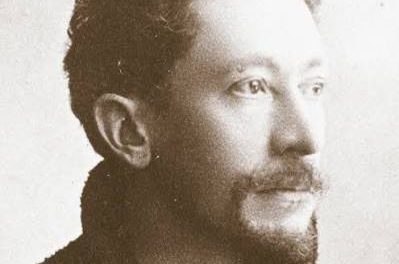
Auguste Toulmouche (21 September 1829 – 16 October 1890) was a French painter known for his luxurious genre paintings of upper middle class Parisian women in domestic scenes.
What is known is that Toulmouche was studying design with another local sculptor, Amedeo Rene Menard, beginning in 1841. Three years later, he was learning painting from a portraitist named Biron who also taught in Nantes. With his fundamental art education completed, Toulmouche left for Paris in 1846 at the age of 17. There he entered the independent studio of Charles Gleyre, the Swiss painter later known for his association with the Impressionists who also began their Paris training under his guidance. Gleyre’s atelier offered Toulmouche exactly what he needed—quiet guidance in the traditional French curriculum of learning to draw in front of classical plaster casts before learning to paint from live models. By 1848, he was ready for his Salon debut.
The year 1848, however, was less than auspicious for beginning a career in any field other than the military. Revolution swept through Europe, and through France for the third time in fifty years. For a scant four years, France was again a republic, only to revert to an empire when Napoleon III declared himself emperor in 1852. For Toulmouche, this turn of events proved fortunate.
At the 1852 Salon, he not only earned a third class medal, but his painting, La Fille, was acquired by the emperor himself. (….)
With success at the Salon and imperial approval of his art, Toulmouche’s reputation was assured. He continued to specialize in depictions of charming domestic scenes of mothers and children or of young women in the throes of various romantic dilemmas. (…)
This type of image, sometimes referred to as Costume Painting, found a ready market with both middle class and upper class audiences, and continued to bring Toulmouche professional success and acclaim.
In 1861, he won a second class medal at the annual Salon.
As a practitioner of Costume Painting, Toulmouche was one of a group of artists who adapted the emotional expressiveness found in earlier history painting to the depiction of romantic narratives based on everyday life. There is clearly a relationship to acting techniques in this imagery as well; Toulmouche’s figures express a range of sentiments through stylized gestures that would have been part of a standard theatrical repertoire. (…)
During the 1860s, Toulmouche refined his style, and began exploring more complex compositional structures. At the beginning of the next decade, in 1870, Toulmouche received the Legion of Honor award, surely a monumental accomplishment for someone from a modest Breton background.
Over the next twenty years, Toulmouche’s although remaining a resolutely academic painter, there was nonetheless a lightening of his palette in the 1870s as well as the incorporation of Japanese elements in images. (…)
Toulmouche’s work was also admired in the United States. (…) He even received favorable mention in an otherwise disparaging overview of French art published in Harper’s New Monthly Magazine in 1877. At the Exposition Universelle in 1878, Toulmouche’s painting was again honored with a third class medal.